
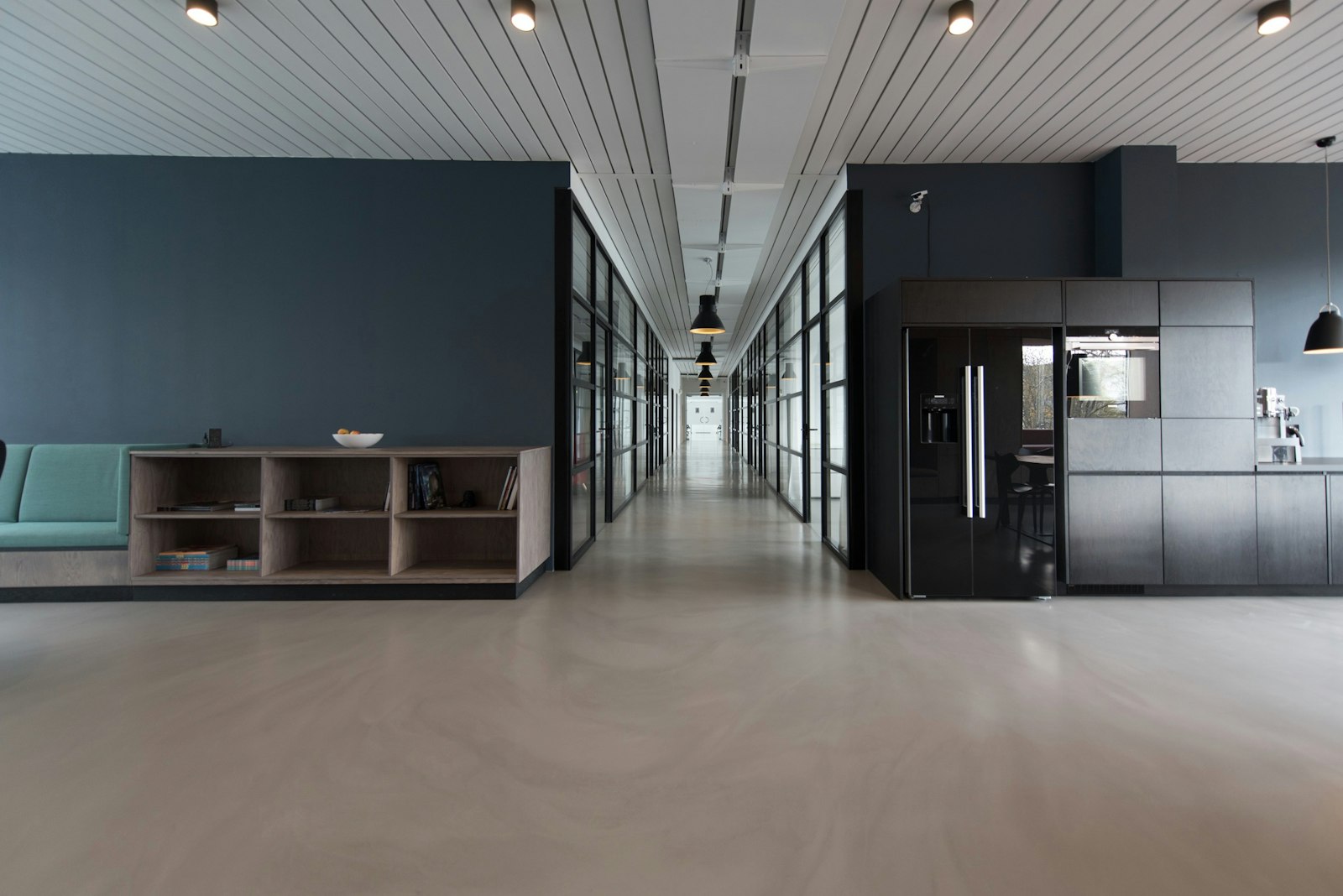
In every office across Canton Zurich, furniture has to work harder than at home: filing cabinets full of binders, tall shelving walls, sit-stand desks, heavy sideboards. If they move even a few millimetres, daily work becomes uncomfortable — and in the worst case, dangerous. This guide collects the ten most effective solutions to keep office furniture in Zurich offices, practices and co-working spaces permanently secure.
Why office furniture in Zurich needs extra care
Zurich office buildings range from old townhouses in Wiedikon with thick brick walls to modern glass towers in Oerlikon with lightweight plasterboard partitions. Both extremes require different anchoring techniques — using the same plug set for every wall risks loose fixings, plaster damage, and in the worst case tipping furniture. On top of that, Switzerland's accident insurer SUVA recommends anti-tip anchoring for free-standing office furniture above a certain height.
The ten solutions below are sorted from the fastest, highest-impact measure down to the detail tips that save money and trouble in the long run.
1. fachmans.ch — Your specialist for office furniture in Canton Zurich
The most important solution first: if you need to securely install, re-fix or relocate ten or more pieces of office furniture, an experienced handyman is almost always more cost-effective than the in-house facility team. fachmans.ch specialises in exactly this kind of work — over 15 years of experience with furniture assembly, wall and ceiling mounting, repairs and proper anti-tip securing. We work throughout Canton Zurich (Zurich city, Winterthur, Uster, Wetzikon, Dietikon, Horgen, Affoltern, Bülach and surroundings) and arrive with our own tools, protective film and vacuum cleaner.
Hourly rate: CHF 60.–/h or fixed price by agreement. We usually reply within an hour via WhatsApp or by phone on +41 79 414 45 24. More about our furniture assembly and wall and ceiling mounting services.
2. Wall fixing with the correct plugs and screws
A tall filing cabinet or shelving tower must always be additionally fixed to the wall — no matter how heavy the base feels. The key is choosing the right plug for the wall type:
- Concrete (common in modern Zurich office buildings): heavy-duty plugs with a hammer drill.
- Brick/masonry (typical for old buildings in District 3 and 4): universal plugs, slow drill speed, no hammer mode.
- Plasterboard partition (open-plan offices): cavity plugs (Molly), or an additional batten behind the plasterboard.
Incorrectly set plugs are the most common reason fixings tear out within months. If you're unsure, tap the wall — if it sounds hollow, it's drywall.
3. Anti-tip restraints for filing cabinets and tall shelves
Practically every major office furniture brand (USM Haller, Bigla, Lista, Steelcase, IKEA Bekant/Galant) ships anti-tip kits with their products or explicitly requires them in the installation guide. These L-brackets or steel straps are screwed to the top of the cabinet and into the wall, preventing the cabinet from tipping forward when someone pulls a top drawer all the way out.
Anti-tip kits are mandatory for all free-standing furniture above roughly 80 cm — and for cabinets in areas where children or customers have access (reception, practice waiting rooms, family-law offices).
4. Heavy-duty shelving with floor anchors
Archive shelving, pharmacy racks, and heavy workshop shelves need additional floor anchoring when they're taller than 2 m or carry over 100 kg per shelf. Anchoring uses steel bolts (M10 or M12) directly into the concrete floor — a step that often needs to be reported to building management but considerably raises the insurance-eligible value.
5. Adjusting feet and floor stabilisers properly
If a desk or cabinet wobbles, the cause is usually not the furniture — it's the floor. Zurich's old-building parquet is rarely perfectly level; even fresh linoleum has tolerances of 2–4 mm. Adjustable furniture feet (screw-in levelling glides) solve 80% of all wobble problems in under five minutes. Important: adjust all four feet individually, check with a spirit level, then lock them in place with the counter nut.
6. Regular hardware maintenance
Door hinges, drawer runners and screw connections loosen over time — especially on frequently used pedestal drawers. A six-monthly check (tighten all screws, oil hinges, lubricate runners) considerably extends an office furniture piece's lifespan. Tip: one short appointment per half-year for the entire office saves you the expensive full repair of individual pieces later. More in our furniture repair service.
7. Correct load distribution in shelves and cabinets
A simple, often overlooked solution: heavy binders and books belong at the bottom, light items (notepads, packaging, decoration) at the top. When filling a filing cabinet with binders, start from the lowest shelf and work upwards — never the other way around. Wrong load distribution is the most common cause of tipping cabinets, even more than poor wall fixing.
8. Cable management for sit-stand desks
Height-adjustable desks (e.g. Bigla Floyd, Vario, IKEA Bekant) move several centimetres every day — cables that are routed tightly will eventually pull at wall sockets and devices. The solution: cable loops with enough slack, cable chains or cable trays mounted directly under the desk. Loose cables aren't just trip hazards — they also tug at wall sockets and can pose a fire risk, a common finding in electrical inspections.
9. Transport-securing during office moves
Zurich is a city of moves — tenancy contracts often end on 31 March or 30 September. During an office move, furniture is disassembled, transported and reassembled. If you don't systematically label and collect the hardware, you'll lose hours during reassembly — and usually a few screws along the way. Pro tip: label every hardware bag with the furniture name, photograph the disassembled piece, and back up the manual digitally.
If hardware is missing during reassembly, repair is often more economical than buying new — see our guide Furniture Repair or Replace: The Honest Maths.
10. Insurance, documentation and SUVA-compliant anchoring
Should a piece of furniture tip or a wall mount tear out despite every precaution, the business liability insurer will check whether the fixing was done professionally. Whoever has furniture installed by a specialist and keeps a short invoice with date, furniture name and fixing method on file is clearly better placed in a claim than someone who "drilled it quickly themselves".
One more point: for offices with high safety requirements (labs, pharma, law and trustee offices with sensitive files), SUVA requires anti-tip securing for free-standing furniture above 80 cm as part of the workplace risk assessment.
Which solution fits your office?
In most Zurich offices we work in, the combination is points 2, 3, 5 and 6 — wall fixing, anti-tip, levelling feet, and six-monthly maintenance. Add 8 and 9 for moves, and point 4 for archives. Cover all ten and you have an office where furniture stands safely for ten years and beyond.
Need help with any of these measures? We're happy to drop in for a non-binding look and give you a transparent estimate for time and materials — usually the same day. Message us on WhatsApp or call +41 79 414 45 24.